Forgiveness means giving up all hope for a better past
Lilly Tomlin
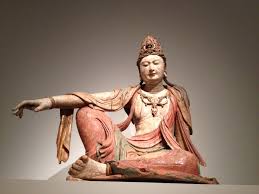
Forgiveness means giving up all hope for a better past
Lilly Tomlin
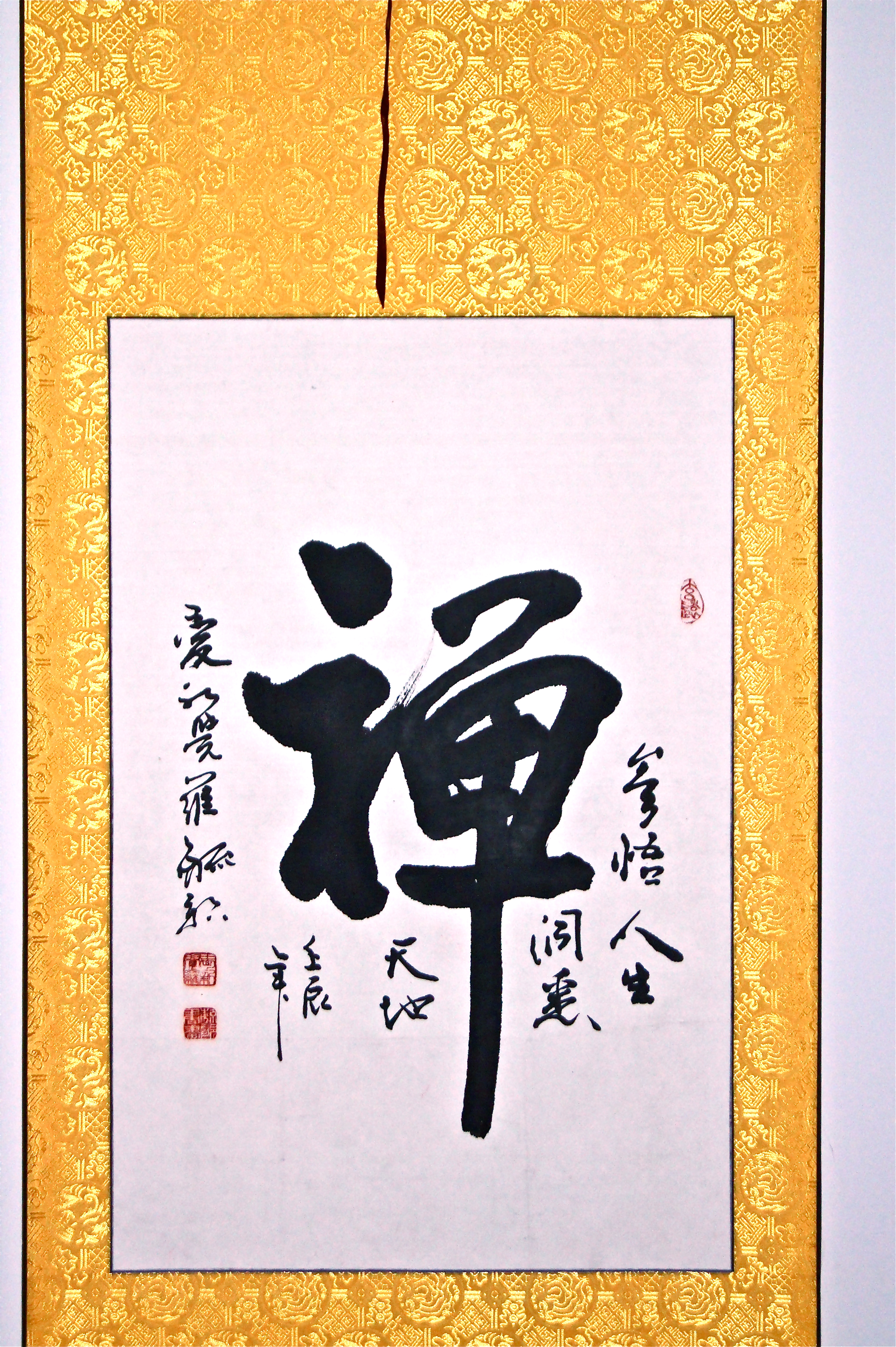
800 years or so ago Dogen said something to the effect that no thought requires a second thought (I paraphrase).
In a talk recently Nyogen Roshi said something that really helped me out of a place where I was stuck thinking about things I had screwed up. I mean things going back 50 years in some cases. Quite a litany when you reach into your bag of tricks that far.
He said:
All thoughts are self liberating.

Two books just came out about science and the “big picture,” that is, what it is all about. Meta-meta, and all that.
One is “Beyond Biocentrism” by Robert Lanza MD with Bob Berman.
I suggest that you read it.
In full disclosure I have gotten to know one of the authors, Robert Lanza. He spoke at the Zen center where I practice (I encourage you to go to the Hazy Moon website where you can hear some of that talk) and I even collaborate on biomedical research with him. In fact, if you go back to my first blog on this site, he is the one who encouraged me to write in the first place by asking me about a GUT (grand unified theory) of Zen. After I demurred, I tried and came up with that first blog (and the much too cute, and much too grandiose, name for this website, Zengut).

I wrote a blurb that Bob Lanza included in the hard copy of “Beyond Biocentrism” (and on his website) calling it “…a must read for anyone who as ever wondered where modern science…. Is going. What does it all mean? Brilliant and insightful…” On Dr. Lanza’s website you can read a comment I made about his first book, “Biocentrism” where I wrote: “holy shit, this is a great book.” I will discuss “Beyond Biocentrism” in the future in much detail and will compare and contrast it with the second book, which I have just started to read.
This second book is “The Big Picture” by Sean Carroll. He is a physicist at the California Institute of Technology (I just gave a talk at their faculty club there on ocular inflammation yesterday!) and has written several books and produced a couple of lecture series for the Great Courses on physics for lay audiences. They are quite good. Dr. Carroll seems very smart, sincere and honest. I see at the end of his new book he tackles consciousness, and while I admit I briefly peeked ahead, I want to digest the whole book before writing about his approach and comparing it to Dr. Lanza’s approach and Zen and my own impressions.
But at this point I do want to say Dr. Carroll starts his book by describing his perspective as “naturalism” and notes that Buddhism takes a naturalist approach, at least to some extent. And I have already come across some material I really like.
The Diamond Sutra ends with this poem [page 27]:
“As a lamp, a cataract, a star in space
An illusion, dewdrop, a bubble
A dream, a cloud, a flash of lightning
View all created things like this.”
So, not bad for the first 16 pages, Dr. Carroll. Lets see where you are going with this.


I have heard that there is just one photon, one photon field without beginning or end, as it were, but that this one photon expresses and manifests local conditions, the contingent flow of energy, as a given photon in time and space, that is, as all photons throughout time and space. . .
In fact perhaps the same can be said of all particles, really, of everything. Like how there is only one ocean, but waves express local conditions that rise and fall.

Last week my 7 year-old grandson asked me if I heard Prince died. Yes. How did he know? His mom told him. Did he know about Prince and his music? He knew the song Purple Rain. He liked the song, although at first he thought it was purple raisin. He was somber, reflective.
Two people I have known for many years also died last week, just two days apart. Cancer. Not close friends or family, but colleagues I have known and worked with and respected. Both lovely, intelligent, accomplished, dedicated physician scientists.
Ultimately liberation from constraints, the realm of measurement and the senses, is the next wave.
Gate gate paragate parasamgate boddhisvaha.
Riding the waves to the other shore.
OK, not quite koans, but worth some time if you are so inclined:
Where were the 1 million digits of pi that we have calculated (or for that matter the unending string of numbers that are embedded in pi) before we invented numbers?
Same koan:
Where was the unending number we label “e” that is it’s own differential and integral before we invented calculus?
Similar koan:
For both pi and e, where are all those unending digits now?
Similar koan:
How can there be a square root of -1 when any two negative numbers multiplied is a positive number? We call this number “i” and it is essential in the mathematics of quantum physics that is at the heart of all scientific thinking.
I can go on and on, but maybe you get the point.

Here’s my current suggestion for the coolest animal (hint: it is not us, either despite of, or maybe because of, our awesome and dangerous brains and opposable thumbs):
TARDIGRADA
Sounds impressive! Actually, despite sounding like the name of some hard-core conquering emperor, it means ‘slow step’ in Latin.
Less impressively, it is also known as the water bear.
But it is WAY more impressive than any marauding horde.
There’s a great chapter about them in the book “Animal Earth, the amazing diversity of living creatures.” I like this book; while limiting itself to animals (not plants, say, or bacteria, etc.) it has examples of all the major groups, and so despite our brain chauvinism, vertebrates are barely mentioned.
At 0.003 to 0.08 inches you can barely see it without magnification. They live in both marine and fresh water. These can be extreme environments and collections of water as thin as the layer of water on moss or on “lichen encrusting a headstone.” There’s some likely in your immediate vicinity right now. Some are “herbivorous” eating plants and algal cells, others are predatory on small animals like nematodes (ubiquitous small worms). In marine waters they tend to reproduce sexually. In fresh waters, some are hermaphrodites and others can reproduce by parthenogenesis, meaning mother’s eggs just start doing their thing, no need for sperm. So, for those water bears there is no need for males.
But here’s the coolest part:
They undergo “cryptobiosis,” described as a kind of “death-like suspended animation.” The dehydrate over less than an hour and become what is called a “tun.” They use glycerol and a trehalose, a simple sugar to replace water molecules. The tun can tolerate:
Temperatures approaching absolute zero (much colder, it says, than liquid nitrogen)
Temperatures up to 120 centigrade or 250 degrees Fahrenheit (they can live in hot springs without being in this living dead condition)
“Huge doses of radiation”
A “hard vacuum”
Up to 600 atmospheres of pressure.

So, you think global warming is a threat to life on earth? Think again. Of course rats and roaches wont care either if our coastal cities are under water, our economies dive, millions starve from lack of water from loss of run off from major mountain ranges and destroyed habitats and ecosystems.
We will take down ourselves, and a large percent of species on earth if we continue living as we have, but many will survive.
Earth has put up with more than we can dish out, and life has survived massive extinctions before (the book “The Sixth Extinction” will teach you about that, as will any good history of life on earth or a trip to a good natural history museum.)
This extinction is unique in that it is the first massive extinction done knowingly, out of pure greed and willful stupidity and self-deception, so some call it the Anthropocene (Latin for people fucked it up. Well, not exactly; it means the people’s period. Power to the people!).
So I worry less about earth or even life on earth than I shake my head at our arrogance and hurt for our kids and grandkids. Species come and go. Biology, evolution, is not romantic or sentimental. Life on earth has the urge to survive, to grow and develop, to evolve, but it is not unidirectionally goal directed. We are. Let’s not fool ourselves. Our concerns about the environment are basically about us. Earth just finds us wordy apes petty, rude and annoying, not existentially threatening. In a few millions of years even our most toxic remnants will be dissolved, dissipated, and metamorphosed (OK some will take a few tens, or even hundreds, of millions of years, but earth has deep time).
We’re not water bears; we’re not that cool. We are just an evolutionary experiment—fragile bodies with overblown, overly self-important, big wordy brains. Is there a chance that we will look up from our devices, our efficiencies, our clinging and our lusts, with our attention spans less than goldfishes, to see past our encrusted defense outer and inner mechanisms, be brave, and do the right thing? Judging from the popularity of certain republicans who thrive on greed, ignorance, fear and hate right now, I am not convinced. Judging from the reaction to them of many, to the wisdom of some I know and read and hear about, I am allowing myself some tiny sliver of hope.
Zen impartiality or not, I’d like my grandkids not to live in a seething hell of destroyed civilizations and ecosystems.


Rather than launch into a technical description of entropy and the relationship of energy and entropy lets try this first.
More entropy means more disorganization and more ignorance. Low signal to noise. Less information. Like static preventing the faithful transmission of data. Think of loud static on a radio when you are trying to listen to music on your car radio.

If I tell you I mixed up the numbers one through ten and put them in a bag, then I picked out two, say a 3 and a 7, all you know about the next one I will pick is that it is not a 3 or 7. So they are mixed up, disorganized, and we have a bit of ignorance about some aspect of that system. Relatively high entropy. If I throw in some letters or blanks into the bag along with the numbers, i.e. static, you are even less able to predict the next thing to come out of the bag!
Now I tell you I ordered the numbers from ten down to one. There are no blanks or letters. I picked out a ten. Next picked will be… nine! Very good. You had little to no ignorance. But I had to put extra energy into ordering the numbers compared to throwing them in the bag. I had to have some way to assure they stayed in order as well. Low entropy, but it took more energy.
Meditation can be seen as aiming for high energy, low entropy. But I am not sure that’s quite true for zazen. You’d have to ask a Zen teacher. Certainly “mindfulness” is like that.
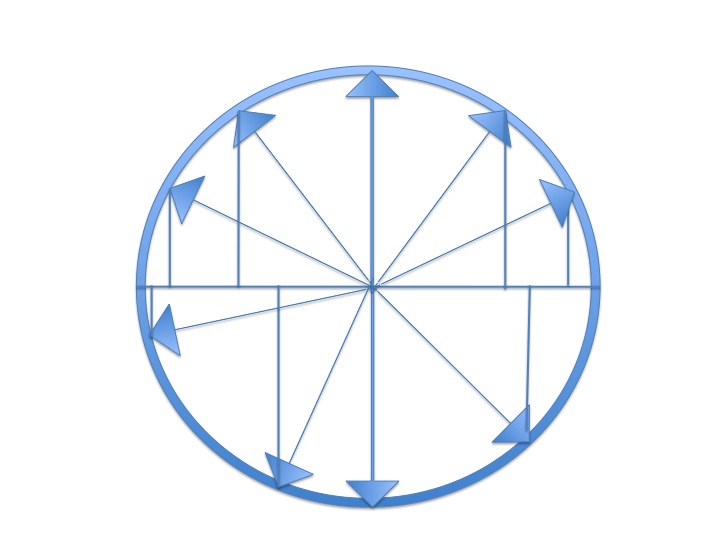
A circle is low entropy. You know everything about it and it took energy to create it (minimally mental energy, in addition perhaps energy to move the pencil or program and run the computer).
Symmetry is not ignorance. True, by definition symmetry is present when you can’t tell something has changed, like someone else spinning a circle while your eyes are closed, so that seems like ignorance. But to do that experiment, you need to know that the experiment was planned and then do it! That’s a lot of knowing, organization and energy!
Information is low entropy. It takes energy to put 0’s and 1’s in some order and that is one aspect of what information is. Ordered dualism.
Meaning is how we interpret and experience information. It is our perspective on it. It is contingent to the max. It is easily colored by our wishes and desires, by our egos.
I just read that the Nobel Prize winning physicist Steven Weinberg, who unified the electromagnetic and weak nuclear forces (along with others, of course; anyway major physics achievement) wrote: “The more the universe seems comprehensible, the more it also seems pointless.”
That seems very nihilistic and depressing. Perhaps that’s how he meant it. If so, somehow he had dealt with it because some four decades after writing that he is still writing books!
On the contrary, that seems very Zen to me. And liberating. It relieves us of arbitrary values and goals. The kind the ego sets up to measure ourselves by, so we can achieve them and reassure ourselves. Except when we don’t.
What ultimate, objective, cosmic, universal, non-dualistic “point” could there be? Any point we could articulate would be a human construct, limited and contingent, a dualistic notion of use in only a very small corner of time and space.
Matthieu Ricard writes in his book “Altruism” that the ego is the crystallization of our identity. He writes that we try to protect it. That’s pretty good, but I am not sure that it is quite right. There is no single anatomic brain space that houses the ego. I think the ego is the process by which we protect our identity. The identity is our sense of who we are based on our conditioning (biologic and psychological, contingent on where and when we are). It is how we organize our sense perceptions and react to them. It is our karma, if you will. It is how we try to make the world comprehensible, to find a point. The ego is the process of having and wanting there to be a point. A point is like a location, a beacon, a polar star that the ego can refer to on the horizon to measure itself and its position by so it can better protect us as we cruise through the world of time and space, the world of the six senses.
So as the universe becomes comprehensible, what we comprehend may not be to our ego’s liking. It may not put our bodies (brains included) at the top of the heap. It may remind us that our limited sensory experience is a pretty pale reflection of the vastness of the universe. Of course comprehensible in this context means the forces of nature. The things physics studies. That which can be measured. It does not mean the whole shebang.
To be clear: I am not suggesting a lack of values. I hope you value compassion. I hope you don’t value your suffering and especially not the suffering of others. I am only suggesting not being seduced into thinking that is the “point.”
Or is it? We can chose to embody compassion, we can aspire to the low entropy high energy state. Is that the “point” of our lives, our minds, the dream, the whole show? Some think so. I admit to liking that view. But maybe that’s the point! It is a goal to like, admirable to be sure, but do I like it because it makes me feel better about myself? Is that my ego protecting me?
No “point”? Perhaps that’s kind of like “ordinary mind is the way.” Or the miracle is chopping wood and carrying water. You don’t need a “point” writ large to the universe to eat when hungry, or to be compassionate. That is the functioning of the universe. What needs to be added? What would be the point?

A couplet from the poem by Yung Chia Hsuan Cheh caught my eye.
The poem is called either “Song of Enlightenment” in the Translation by Sheng Yen in his book “The Poetry of Enlightenment, “or “Song of Realizing the Way” in the translation in “The Roaring Stream, A New Zen Reader.”
The lines are:
Ask the mechanical puppet
When it will obtain Buddhahood through practice
(Sheng Yen)
Put this question to a wooden puppet
Can Buddhahood be gained by seeking it?
(Roaring Stream)
While I tend to prefer the Roaring Stream translation as being more fluid and less technical, in the case of this couplet I like Sheng Yen’s translation more. After all, why ask can Buddhahood be gained by seeking of a wooden puppet, as seems to be the case in the “Roaring Stream” translation? It is a perfectly good question, by why ask it of a puppet? You might ask a Roshi or even a fledgling Zen student, somebody actually doing it, about the point of practice, but why ask a puppet a question about the nature of practice, attainment, enlightenment?
In Yen’s translation we are asking the puppet if IT will obtain Buddhahood. This is presciently modern.
After all, if one takes the vision of the modern absolute materialist (or for that matter ancient as such did exist before the scientific revolution) we are but organic puppets, water and carbon and a bit of other stuff come to life. In fact, that is literally true. After all water is present in pre-solar system gasses in space and microscopic diamonds (a few carbon atoms) may have been the first crystalline substances in the universe.
It is indeed a basic Buddhist view that all composite things are conditional, contingent, without essential inherency. All created things are a dream, like a flash of lightning, a bubble, a cloud, to quote the Diamond Sutra. We take form and substance from the propelled momentum of our karma or cause and effect, from the dharmas or laws of nature, pretty much the same thing. So as far as that goes, materialists and Buddhist are on the same page there. We are conditioned, brain and body, by our past and our makeup (the elements, the skhandas, whatever).
Are you a wooden puppet?
To the degree you are atoms and conditioned brain responses, yes.
Hence asking the wooden puppet about sentience.
Can a wooden puppet practice hard enough to be something it’s not? Can it magically become sentient like Pinocchio? Can you?
Is Mind an emergent phenomenon? Or is it the Nature of nature?
Ask the wooden puppet.

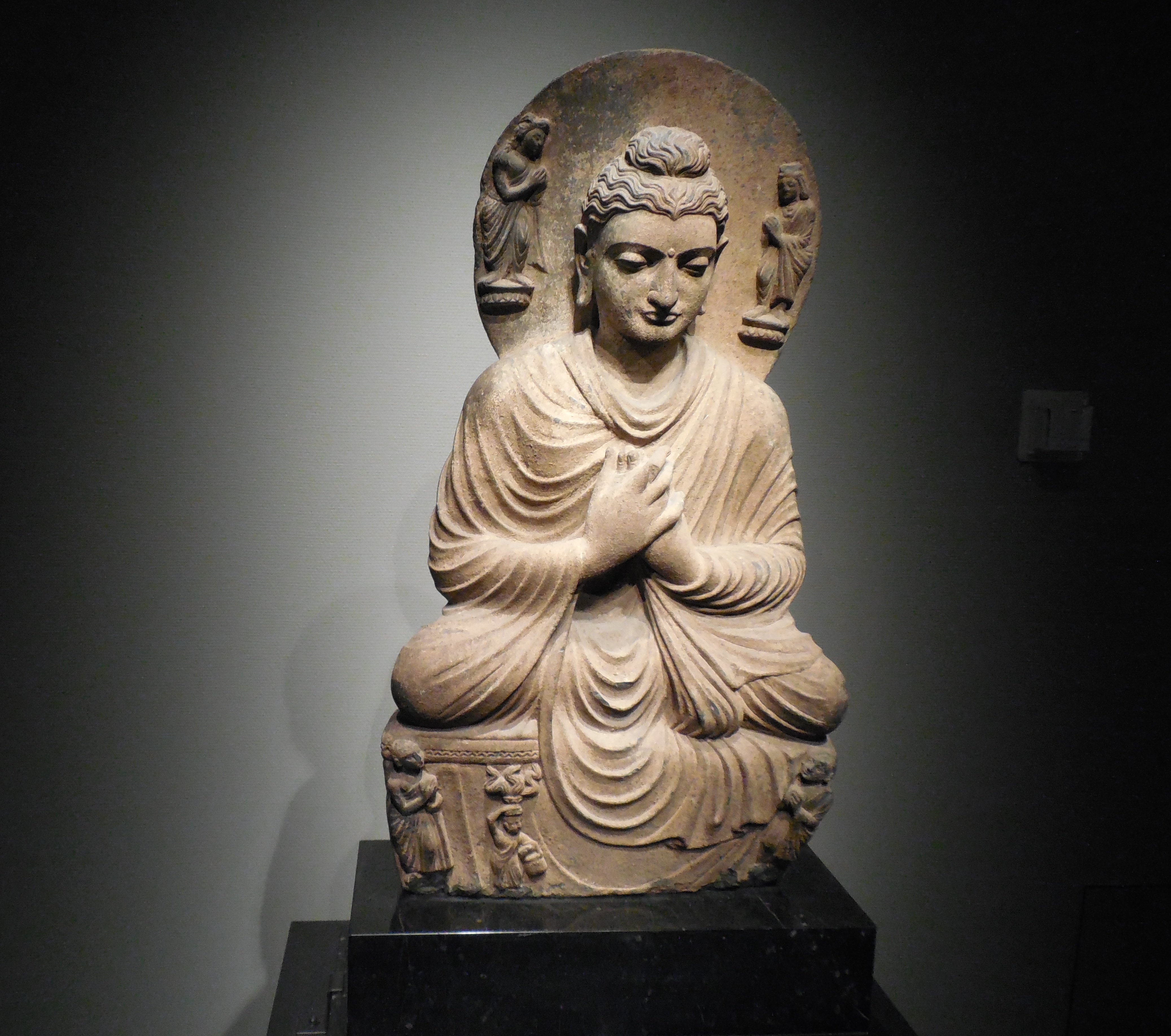
In his book “Greek Buddha” Christopher I. Beckwith discusses Pyrrho, a philosopher who went along with Alexander the Great on his world tour of conquest in the late fourth century BCE.
It seems Pyrrho went native and studied with Buddhist masters. One story is that he made a lot of money as a court poet and then he was called to task by some wise guy, maybe some Buddhist sage. Was Pyrrho just singing for his dinner or was he for real? Pyrrho took the challenge! He went after ‘for real.’
When I say he studied with Buddhist teachers, I mean he practiced. His life was transformed. When he returned to his home island he lived his life as practice. He was beloved. He lived to keep it simple, keep it real.
We have later records of his teachings. He taught things (pragmata) are:
Those of us familiar with Buddhist terminology will see there is a connection with dharmas as what we perceive, and pragmata, though the latter may have some other, more ethical or philosophical, connotations. Beckwith compares these three with the very basic Buddhist teachings of the Three Characteristics:
1. Anatman: no (innate) Self (Identity) [Beckwith has as third but it seems more like #1 to me]
2. Dukkha: uneasy, unsatisfactory, unsteady
3. Anitya: impermanence, unfixed.
He suggests that Pyrrho’s terms are in effect a direct translation into Greek of the Buddhist terms.
Beckwith also points out that since Pyrrho was writing and studying and practicing Buddhism around 300 BCE, his form of Buddhism is probably closer to the true teachings of the Buddha than many of the even earliest written Buddhist texts. Of course it’s not like we have the original writings of Pyrrho either, we have later versions and descriptions, and the early Buddhist writings are based on a vibrant and robust oral tradition. But Beckwith does have a point. Pyrrho’s philosophy is certainly based on very early Buddhist teachings as understood at least by some Buddhists who lived maybe a bit more than a century after the Buddha died. The fact that in what the Sutras call the ‘first sermon’ by the Buddha, as well as in many versions of Buddhism 101, the four “noble” truths (as I have done in earlier blogs) are used to introduce Buddhist thought, does not mean they were necessarily the original core teachings. It may be that is how it was later perceived or that it fit later understandings of the Buddha’s teaching (or agendas of later teachers and practitioners, as Beckwith suggests). Beckwith goes a lot further though, and you can read his book if you care about such things. If you are Buddhist, you may take exception to some of his theories. But to me, that makes it fun!
There is a great section in Beckwith’s book on the names Lao Tzu and Gautama being the same. That intrigues me. Clearly Zen/Chan is Daoism (or Taoism; pick your spelling!) meets Indian Buddhism. Not the later Daoism of gods and demons and alchemy and immortals, but the early Daoism of Chuang-Tzu and Lao-Tzu (author of the Dao De Ching). Sometimes I think Chan/Zen is as much a form of a Chuang-Tzu’s Daoism than it is a form of Indian Buddhism! Of course Chan and Zen tradition don’t quite see it that way. And the Chinese Chan masters certainly relished texts from India and the Buddhist kingdoms of the Silk Road like the Lankavatara and Diamond Sutras (they are really great stuff, read them if you haven’t and if you have any interest in Buddhism at all. Red Pine has done great translations).
Interestingly, Chuang-Tzu may have lived about the same time as Pyrrho. Of course they wouldn’t have met. Lao-Tzu lived earlier, it seems more about the time of Gautama Buddha (though dates are controversial for both)! One story in Daoist lore is that near the end of his life Lao-Tzu was said to have left China to travel west. Is Lao-Tzu and Gautama the same name as Beckwith suggests using a linguistic analysis?What does that imply? Very odd for someone who is Chinese to purposely go off to die far away in foreign lands. Very intriguing. Again, read Beckwith if you are interested in the argument.
Anyway, back to the core teachings, however they fit into the historical scheme of things. These core teachings are very scientific. Not only because they can be inductively arrived at by observation and confirmed by experience (the original meaning of the term “experiment”; same root word and that was on purpose), but in their essence.
Regarding impermanence certainly no composite “thing” lasts forever.
Modern physics does not have a permanency of things as an essential, verifiable teaching. Not particles, not universes. Quite the opposite. There are neither fixed particles (atoms and subatomic particles are basically forms of energy) or a fixed time and space. I am not only talking about relativity theory, which does imply that time and space are not separate, fixed entities, but more basically. Much has been written and discussed on the physics and metaphysics (that is the interpretation of physics, not the study of ghosts and goblins) about time and space. We do not know the extent of time and space, or even if these things are really distinct entities, if the in fact exist other than as illusions of mind. Robert Lanza talks about this in his book Biocentrism, as do others, and I understand Dr. Lanza is writing another book about time, space and the ‘illusion of death.’

Regarding the lack of innate existence we have seen particles themselves are just perturbations of energy, of the ‘quantum field.’ Modern biology and the earth sciences teaches us that evolution is contingent on the environment just as the earth and its atmosphere has been shaped by life. It is the environment that determines “fitness.” Most of the minerals on earth were made possible by the oxygen released by photosynthesis and exist nowhere else in the solar system. Neither the earth or the life on it, no individual, species, or life itself for that matter is fixed and innate, a fixed separate definable entity.
And while science is about measurement, we don’t know the extent of what can be measured. Is there an eternal set of multiverses and dimensions? Were there “big bangs going back and forward forever? Again, if time and space are illusions, what could a beginning and end possibly mean?
As for “unstable,” that is why there is anything at all from a scientific and mathematical point of view. I’ve written before about breaking symmetry. An ideal circle encompasses all and everything perhaps, it is certainly infinitely symmetrical by definition, but to have change there can’t be perfect symmetry. I have quoted the quantum field theory text that says that we are perturbations in a field. This is related to impermanency of ‘created things’ (is the field permanent? Is it a “created thing’?) as well. If the field were stable, there would be no things, no dharmas, no pragmata. For anything to change, to come into existence and then as it must eventually not exist, if there is to be what we experience that gives rise to the thought and perception of time and space, the system by definition must be unstable. It can’t be a system with an innate unchanging stability, a concrete thingy-ness.
There is change, evolution. There is the evolution of universes, particles, atoms, minerals, solar systems, planets, sentient beings.
As for Dukkha, unease (including but not limited to ‘suffering’ as in old translations into English), that does seem to be the nature of what happens if you yearn for the safety and reassurance of permanence, which is an illusion at best.
So science is quite compatable with anatman, dukkha and anitya.
I enjoy being challenged in my view of history by Beckwith. I enjoy seeing in the practice, writings and teachings of a poet philosopher who travelled with Alexander, a bit of confirmation that these core Buddhist/proto-scientific views were very ancient and proximate and core to the ancient teachings that underpin my practice.
Not that it really matters, I guess. Reality is reality, my practice is my practice, science is science, we live and die, however you conceive of it or dress it up or whoever may have glimpsed it before. Just kind of cool.

Pain for me right this moment is my acute attack of arthritis.
I can’t sleep. I have a swollen red throbbing joint. Picture stubbing your toe hard every two seconds.
There are worse pains. I have had worse pains. Like when my gut perforated some years back.
And I have had suffering. This is pain, not suffering. There’s a big difference.
I suspect a billion or two billon people right now are in worse physical pain than I am. They are in pain from hunger, thirst, all manners of trauma and injury, illness, medical procedures, exposure, or for that matter, childbirth. Hundreds of people are probably in worse pain within a few of miles from where I am sitting writing at 2:30 AM my time.
Pain, not suffering. Billions and billions are suffering. Many more are suffering than are in physical pain. They are afraid. They are lost. They have experienced some deep loss. They are overwhelmed. They are threatened.
I think suffering for me would be seeing my son or daughter or one of my grandsons in this kind of pain. I am a doctor. Parents come in with their kids who have inflammatory eye disease and almost always they are suffering more than their kids. Even if the kids are going blind, it is the parents who seem to suffer more.
Helpless, worried, not my baby. Very hard.
And yet Buddhism talks about an end to suffering. I don’t think that means not caring or not feeling. I think it means not getting overwhelmed by all of the pain and suffering. Your own, your kids’, your lovers’ your friends’, the world’s.
Unless they were conditioned to need that form of attention, your kids (and lovers, friends and yes, even the world) don’t want you to suffer because of their pain. Unless they are very deluded or very damaged (and some are, of course) or very neglected they will soon figure out that your suffering doesn’t help them very much. It probably gets in the way.
What I see in the kids (or spouses, or lovers, or friends or parents) who are sick is they want their parents (or.. fill in the blank) to be cool, calm and collected. Sure there are cultural differences. In some cultures you need to be loud and demonstrative, but that’s just style.
Whether it’s your kids or the rest of the world, they want your attention. They may need help to navigate whatever they are going through. Maybe they are scared. Perhaps they don’t want you TOO cool, at least not all the time; a bit of coddling can go a long way. Sometimes crying helps. Because, well, it hurts and they want to know you know that. They want to know that you care and will do something to help if you can.
And you will help if you can, wont you? Even strangers? And even not pleasant strangers,real people, not just imaginary needy “deserving” people somewhere out there? Sometimes? Just keep your cool and do what you can when you can? Even if it is just to let them know you are there?
Sometimes you can’t make it all better. You try. You chant, you give, you try, you do something. But samsara, the way of the world, is that shit happens. As a parent, lover, doctor, citizen of the world, I know. That’s harsh. Sometimes you have to let go. “One person, one karma,” as we used to say on the commune. That sucks. You know it does. But there it is. That’s why those of us who do a practice, do it as best we can. Because sometimes it just sucks.
The crazy and greedy few aided by our lethargy and willful ignorance will continue to foster injustice, may destroy human life on earth and create a mass extinction event, but we’ll try anyway, right? At least a little, despite our despair and weakness? Because maybe, just maybe, just in case, we aren’t as useless as we think we are?

There are stories in Zen about some Zen master crying over a death of someone in their life. Or it could just as easily be crying over a wayward child, lost to drugs or craziness. Or a parent or spouse with Alzheimer’s. Or victims of disasters, natural or man made. Or you name it.
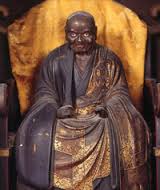
For example, there is a story about a former student of the 18th century Japanese Zen master Hakuin who as a girl breezed through her Zen studies, a real prodigy. When she was older some neighbor took her to task when she cried and mourned her grandchild’s death.
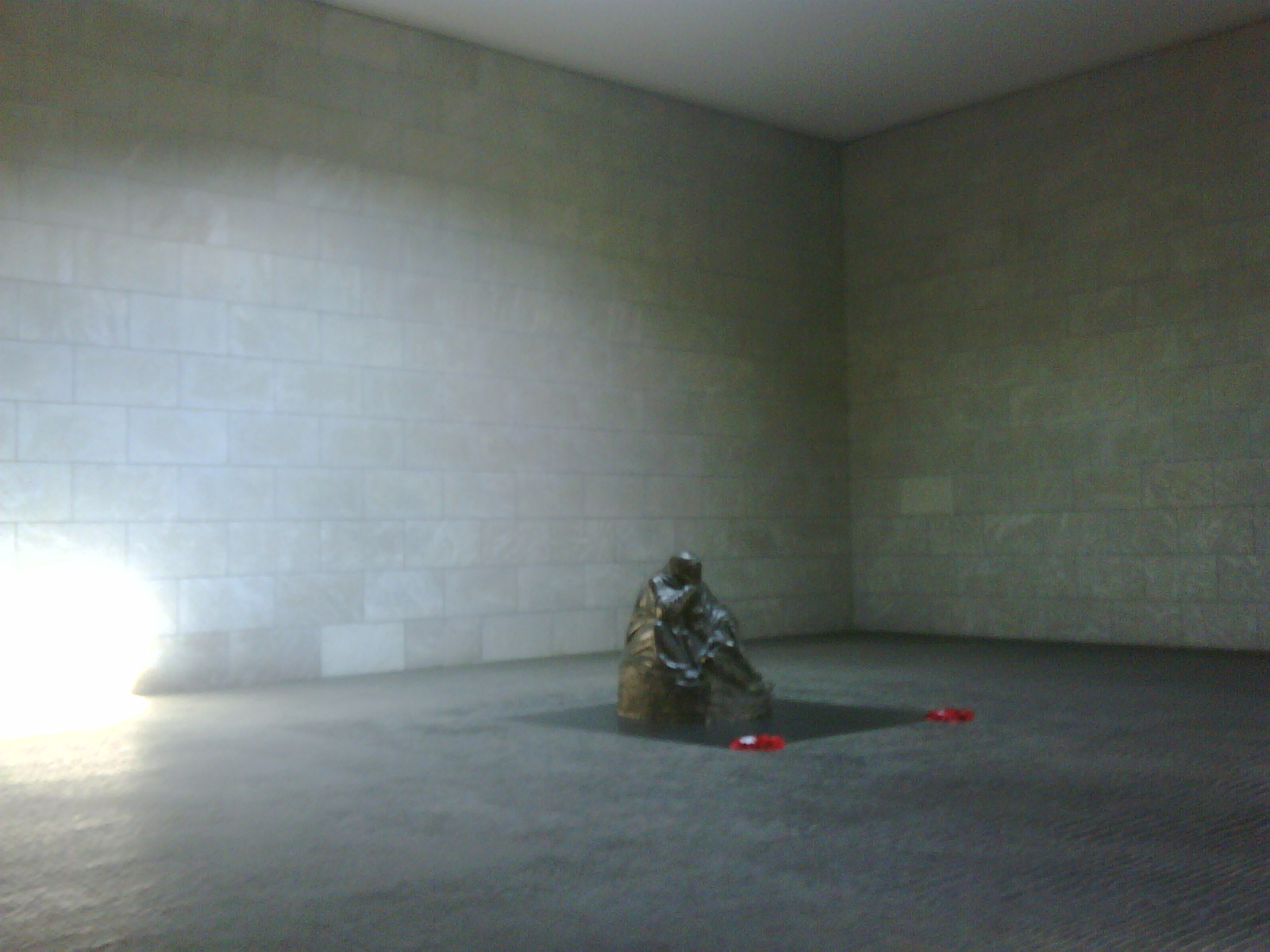
But you were the prized pupil of the great Hakuin, how can you still know suffering? How can you indulge yourself with such crying and wailing and all that? They asked. And that’s how these stories go. Oh you are so enlightened, why are you crying? Why are you so attached? Isn’t it all a dream, a projection, aren’t you beyond life and death? Haven’t you reached an end to suffering?
These stories always end with the Zen master, or the grandmother former Zen prodigy saying, in effect:
“Fuck you.”
Gotta love authenticity.

Sometimes the right authentic response to someone who is judging others for suffering and wont try to help and doesn’t care and wont even try to be cool and be kind does seem to be “fuck you.”
I have had it said to me in that context a few times, though not always in just so many words, and I deserved it. Can be a strong and compassionate teaching.
There is an ancient Chan Buddhist text called “The Ceasing of Notions.” It is some of the oldest Buddhist writings we have the original copies of (early Tang). Among the oldest attested Buddhist teachings, way before this text, going back to Greek reports of early Buddhism when the Greek poet and philosopher (and later Buddhist convert!) Pyrrho was with Alexander the Great cruising India 300 BCE, is basically the ceasing of notions (see Beckwith’s recent book “Greek Buddha” if you are interested; I’ll try to write more about that another time).
To cease notions means don’t limit the universe by your conditioned responses, your concepts of how it is. It means be open and aware.
It can lead to compassion.
To cease notions also means having no fixed, concrete and conceptual notions about what it is to cease notions. It certainly does not mean creating new notions about notions, like that you should not know a rock from a potato because that would be just a notion to recognize you eat one not the other. Or that you should not care about the suffering of others because suffering is a notion and we are all one, no separation, no duality, so it doesn’t matter anyway. Or because it is all just your life. Or you do not cry when it is crying time. Or you do cry when it is time to keep it together, because of some notion about crying or not crying.
Those are some stupid notions. There’s no end to stupid notions, even about no notions!
Be cool. Be kind. There’s a lot of suffering going around. Try, because what else can you do?
Hmm, just for a while there, there was no joint, no throbbing, no pain, just writing; it’s funny how that works.
 ZenGut