Energy, Sensation, Perception

 Unknown

Sensation and perception are how we seem to experience the world. Practitioners of Buddhism and science have given a lot of attention to how we do that and what it means.

From the scientific viewpoint, sensation occurs when a specialized organ interacts with the form of energy it evolved to interact with. These specialized organs are the sensory receptors in the eye, ear, nose, skin, or tongue, for example, though animals have a large array of receptors, like infrared receptors in pit vipers or sonar in bats.

And in an inspired insight I particularly admire, in Buddhism the brain is also a sense organ, one that “perceives” both sensory inputs from other sense organs but also you might consider thoughts a sensory input. Continue reading

Love and Marriage


Caring

Desire

Partner

Hormones

Conditioning

Biologic imperatives

Expectations, voiced or not

Innocence lost, innocence gained

How close is too close, how much is too much?

Not understanding, understanding

Different worlds, same world

Why do I want to be angry?

Glorious and amazing

Wishful thinking

Commitment

Projection

Entangled

Creative

images

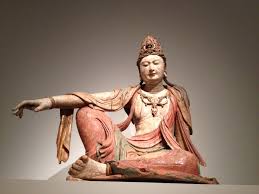
Guan Yin (Kannon in Japanese) , Bodhisattva of compassion, in female form. The male form was originally named Avolikiteshvara. She is the “hearer;” she hears the cries of all suffering, and will go down to the pits of hell gladly when she is called.

After 41 years of marriage to a woman I love, that’s about the only way I can understand it or express it, with poetry. And I rarely write poetry.

I doubt this is gender specific or sexual orientation specific from what I can see. And there are many relationships that are long-term and loving that I imagine do not encompass many of these things. This is simply what spilled out of me about my 44 years of a committed relationship with a woman I love as best as I know how.

I’ll come up with other poems about other relationships.

The real point is that I suspect there is something very deep and profound that these impressions of my life in love and in marriage circle around, that even the most solid day-to-day love can only approach or maybe only dimly reflect as long as egos and agendas are involved:

A love beyond conditioning and expectations.

Abiding compassion.

I think that is the flavor of Xin, the heart of Mind, the taste of existence.

And it doesn’t get old.

For Father’s Day: Is that so?

images-9

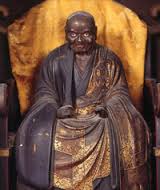
I was writing a story riffing on a tale about the great Japanese Zen reformer and artist of the 18th century, Hakuin.

It seems a young unmarried women had a baby and wouldn’t give up the name the father. Finally she said it was the monk Hakuin. The parents were incensed, not only because he was a monk who was just starting out renovating a small, run-down old temple, but also because they had been supporting him in his endeavors.

They brought him the baby and said, here, it’s yours.

“Is that so?” He responded, and he took care of the baby.

A year later the young woman confessed that Hakuin wasn’t the father, so her parents went back to Hakuin, tails between their legs, and let him know the baby wasn’t his.

Giving the baby back he responded:

“Is that so?” Continue reading

Behind the Curtain; A First Peek into Quantum Weirdness


242


Quantum mechanics grabs the attention of so many people for some good reasons.

Quantum mechanics deals in the atomic and subatomic realms. In the reductive scientific program it is about as small and basic as you can go based on actual experiments.

The results of these studies have led to highly reproducible observations and measurements.

These findings have led to technologic breakthroughs.

 And because quantum mechanics is counterintuitive, bizarre and no matter how hard you try to picture it, model it in your head, think it through, intellectualize, fit in into your daily four-dimensional experience of reality, you will fail, like thousand upon thousands of great minds have failed for a hundred years.

Let me start with an example. I will give others in future posts. Continue reading

Keep It Simple (!)


92

Granted I have not kept it simple, and since in later posts I plan to discuss things like fields and quantum mechanics, philosophy of mind and time, and other things and concepts that our brains tinker with, I will  put up a simple post.

SONY DSC

The best teachings I know of on how to live your life are:

      Pay attention

     No self-deception.

205

The truth of how it works in time and space:

     Everything that ever happened and ever will conspires to make this moment.

SONY DSC

The truth beyond what ever happened and ever will:

      I don’t know.

143

photos courtesy of Susan Levinson


Defining Energy

254

The palpable universe and how we perceive it and know about it is all about transformation of energy (see also the post “Change and Suffering, Phantoms and Dreams”).

Energy patterns upon energy patterns.

We know energy is fundamental. Besides our intuition and use of the word very freely in common parlance, everyone knows that Einstein informed us that things are convertible to energy and energy to things:

E=Mc2

E= energy, M= mass, c= the speed of light. Since c (the speed of light) squared is a constant, just a number that doesn’t change but makes the units work out:

Energy IS mass (stuff/things). Mass IS energy. Continue reading

Why Zen and Not a Modern Mindfulness Practice for Me?

SONY DSC

Print by Claudia Hosso Politi Sensei (teacher at the Black Scorpion Zen Center in Mexico)


If my goal was only to be a little calmer and improve my day-to-day life, a modern mindfulness approach would be easier than Zen practice. There is a mindfulness center at UCLA where I work. It looks really good judging from the website and a couple of brief conversations I have had with the staff there, and would be much more convenient than driving across town to a dicey neighborhood to the Hazy Moon Zen center. Mindfulness practices are certainly less demanding than a sesshin (a very formal and intense meditation retreat, usually lasting 3-10 days). Maybe it would even be a good career move; I could be the mindfulness eye doc without this Zen baggage! Continue reading

Free Will and the Real Web

images


Your brain processes millions of bits of data each millisecond act without any conscious effort. Most brain generated activities don’t have even a whiff of free will involved.

Certainly much of what we do, even complex behaviors, is done on “automatic pilot.” An oft quoted example is when you find yourself at some location you meant to get to without being quite aware of  f the details of how you got there (a bit scary when driving was involved). Or consider  how you cobble together what seems to be a coherent scene from what are actually disparate and rapidly changing sensory inputs that your brain compares to prior experience (that is, conditioning). Continue reading

My Berlin

IMG00090-20100605-1212

A wall I stumbled on in former East Berlin

I was in my 40’s, after I finished my residency and fellowship and was working as an ophthalmologist, when I first got a passport and took my first trip abroad.

My travels are usually connected with medical or scientific research or meetings. I have spoken at such meetings on every continent except Antarctica.I have friends and colleagues around the world.

I have a longstanding research collaboration in Paris that has allowed me to visit a dozen times and get to know the city, once having the honor of being one of the few Americans to have spoken at the French Academy of Ophthalmology (to an audience of 3500 doctors form around the French-speaking world).

Having a long-standing interest in art and art history, I have visited many of the worlds great art museums, gazed at Michelangelo’s paintings in the Sistine Chapel, climbed Brunelleschi’s dome in Florence, entered pyramids, temples and tombs in Egypt (including a couple normally closed to the public), admired Zen temples in Kyoto, had a special entry to see Tang dynasty paintings in Xian, and climbed pyramids in Mexico.

I have been to a party in a foreign embassy, seen Iguazu Falls in South America and snorkeled at the great barrier reef. These are just a sample of what  immediately comes to mind when I think of the trips I have packed in over the last 18 years.

I have gotten around, and would have crossed off a lot of things on my bucket list if I believed in and had a bucket list (I don’t like that idea in the least bit. Dumb and pointless).

Nice enough, I don’t mean to be ungrateful, but for the most part, all of this has had only a modest impact on my life (except for the friends).

Really. When I am struggling in this or that  dark night of the soul from time to time, I promise you these memories mean little. They don’t even come up.

SONY DSC

Water color sketch of Adam of the Sistine Chapel

But the trip that made a difference, the one that taught me something that mattered because I was actually there and so taught me what travel could be about, was my trip to Berlin for the World Ophthalmology Congress in 2010. Continue reading