Not knowing is most intimate: Neil deGrasse Tyson and Grace Slick and Nagarjuna

I recently watched the awesome Neil deGrasse Tyson’s show “Star Talk” where he interviewed Richard Dawkins and had a Jesuit priest on to discuss religion and science. Despite being an atheist and agreeing with much of what Dawkins has to say I found myself rooting for the Jesuit. Dawkins was so arrogant and sure he had the real story, despite some murmurings to indicate humility in the face of our awe inspiring ignorance about the universe (I assure you that while it is amazing how much we do know, or perhaps one could say, despite that we know anything about the universe at all, we know much less than some seem to think we do), his lack of compassion and insight was astounding. Sure I am an atheist and can’t get behind Catholic dogma, so finding myself trying hard to agree with a Jesuit was a strange intellectual sensation!

At one point Neil spoke about a kind of spiritual experience he had in nature. He just objected to dogma. Well, Nyogen is often paraphrasing the great Chan master Huang Po: we have no dogma in Chan/Zen (only realization and practice).

Dawkin’s smugness reminded me of Hawking’s pronouncement that philosophy is dead because science has supplanted it. Was he being purposely ironic in making a philosophical metaphysical comment about the death of metaphysics? You know, like saying “this sentence is a lie”? Perhaps.

Granted some metaphysical speculations have been laid to rest by modern science, but even within the realm of science others have arisen. At what point is math science? How do you define science, is it still falsifiability or reproducibility (if so there goes Hawking’s M theory)?  Certainly Hawking must get that such a statement is a metaphysical stance, hard to justify in terms of these basic questions about the definition and scope of science, that a statement on the limits (absolute  or otherwise) of metaphysics and philosophy is an evaluation and judgment about the nature of reality that is not established deductively but inductively. It is a speculation about philosophy, an opinion; it can’t be measured or proven. It can be disproven (as per the previous discussion, a less than formal proof admittedly but really..!). Whatever it is, it isn’t science.

But closer to home than M theory, we will never be able to step out of consciousness to prove the nature of consciousness. We do find neurologic correlates of states of consciousness, but it is not clear that is the same as grasping the experience or understanding the nature of consciousness.

The nature of consciousness is awareness, and awareness is a subjective experience. We may, and I suspect will, prove the physical correlates of thought. Will that be enough to comprehend the nature of mind, of consciousness?

Is it science? Is consciousness even at its most basic a scientific question? It is the one thing that is at the end of the day the quintessence of subjective experience. It is subjective experience.

Well, think about what we do know. E=MC^2

Energy is mass. What IS energy? We only know what it does, how we experience changes in energy. What could it mean to really know what it is? Certainly scientifically it is sufficient to know what energy, or consciousness, does but we experience what consciousness IS, by definition, because consciousness is exactly what we DO experience, at some level.

Same with mass. We define it by what it does. We understand it confers inertia, that the Higgs field plays a role. What is a field? IT is something that is measurable at all points. What is this something? That thing which, when disturbed, gives us a Higgs boson and confers mass. This is wonderfully sophisticated and true. This is a vision of reality that should take you out of your day-to-day limited experience and open up the universe; yet kind of circular.

For that matter define a flavor without simply comparing it to other flavors. You can get to the chemistry, see how it lights up a functional MRI, but what about that first lick of your favorite ice cream on a hot day? Can math and an MRI capture that? Except perhaps for some specific biomedical research, do we need it to?

We can only kind of say what awareness, consciousness, experience at its most basic, is, what it isn’t, what it may be and not be, what it seems to neither be nor not be, but not quite. Can’t pin it down intellectually. We can come close, we can dance around it, use mathematical metaphors and measure certain aspects of certain behaviors, certain relationships in the world of the senses, but we are limited intellectually by our evolution, our inability to “get our heads around it” as the saying goes. How do you get your head around your head? Like the old Zen saying: adding an extra head to your head?

So yes Neil, savor experience, don’t worry about dogma.

And how about this: Neil deGrasse Tyson at the end of that show said he could even give up cause and effect, that is has worked well so far, but maybe, just maybe….

Certainly in the world of this and that, the senses cause and effect is the best rule of thumb…..

This is not without Western precedence (the philosopher Hume). Not getting caught up in inductive reasoning. Or Sekito Kisen “cause and effect must return to the great reality.”

And while in Buddhism the twelve links of existence are cause and effect, the great exposition of this by Nagarjuna in the Madhyamaka text “the Fundamental Wisdom of the Middle Way” beings with:

Neither from itself nor from another.

Nor from both,

Nor without a cause,

Does anything whatever, anywhere arise.

So cause and effect and yet not form itself or anything else, so implying not caused, no beginning no end, no arising. Nagarjuna says logic comes to the tetralemma: is, isn’t, is and isn’t neither is or isn’t, that is the point where logic and proportion fall sloppy dead (Grace Slick, White rabbit, Jefferson Airplane 1967).

Sounds like bare awareness, emptiness, to me. Wow Neil! And he’s an astrophysicist!

Not knowing is most intimate!


Overlapping Science and Buddhism with Cameo by William Shakespeare

Slide3

Science and Buddhism at their best address reality without dogma and so they do overlap; summing it up (and throwing in W.S. for fun):

Form is emptiness, emptiness is form
The Heart Sutra

The subjective and objective spheres are related
And at the same time independent
Related yet working differently.

Cause and effect must return to the great reality

Each thing has its own intrinsic value and is
Related to everything else in function and position
Ordinary life fits the absolute as a box and its lid
Identity of Relative and Absolute

Every particle and every wave in the Universe is simply an excitation of a quantum field that is defined over all space and time
Quantum Field Theory for the Gifted Amateur. Lancaster and Blundell

Quantum field theory arouse out of our need to describe the ephemeral nature of life.
Quantum field Theory in a Nutshell. Zee

What is it that breathes fire into the equations and make a universe for them to describe?
Stephen Hawking

We are such stuff as dreams are made on
The Tempest William Shakespeare


SONY DSC


Consciousness Primary

SONY DSC

Does it matter if I consider consciousness primary if everything else looks the same whether I do or I don’t?

After all, it does seem like it is all just energy and patterns of energy, and whether Mind is primary or an epiphenomenon vis-a-vis these patterns, I still have my life to deal with. I still have my momentum, my conditions and my conditioning. I still have the perspectives and limitations I inherit from culture and biology. In the jargon, my karma.

Buddha has been quoted as saying that he had come to teach the way to end suffering.

He taught how grasping at our mercurial existence, trying to reify our experience, to make our lives bite size and manageable, we privilege our desires, hopes and fears, leading to suffering.

Practices like meditation and the precepts are to walk us out of our conditioning, our delusional state of mind and our habit of grasping at whatever we think will calm our fears and justify our anger, desires that leads to more suffering.


Samadhi is the state of mind of someone not distracted by grasping and delusion.

Compassion is the state of one not in the throes of delusion.

Don’t get lost in ideas and philosophizing, in esoterica and fun facts, the Buddha counseled in some early texts. Don’t listen to authority just for authority’s sake, find out for yourself what you need to do to end your suffering.

And then he gave the tools one needs to do this, and that is the Buddhist practice (meditation etc).

Fine. That does about sum it up.

So then, what’s all this about Mind in Buddhism, in Zen in particular? Why does this seem to overlap with the writings of card-carrying scientists like Thomas Campbell and Robert Lanza who are part of such a “Mind Only” perspective (in Buddhism the Yogacara school or in teachings found in such texts as the Lankavatara sutra), even if they don’t label themselves that way?

Why grant a quality to Energy, to what underlies quantum fields, the scientific foundation, the scientific essence? Why think that quality, its nature, may be consciousness?

Because it seems to be true. It just seems to be that the quality, the state, of being is in some way a state of Mind.

And if true, then it is the opposite of delusion and ignorance, so it just might be something to consider!

In Chinese Chan (Zen) there is the statement that “Buddha is Mind.” (or Mind is Buddha). One ancient Chinese Zen teacher said he stopped saying Mind is Buddha. I get the impression he thought it was unnecessary, redundant, it was something extra to even go that far. Why add the concept of “Mind” to Being? His student, already a Zen teacher in his own right, when told of his teacher’s change of heart (in Chinese Xin=mind=heart), said, meh, ok for him, but I still like Mind is Buddha!

Energy is being. Being is energy. Mind is the closest mirror we have to hold that up to, the part of our being that resonates with the quality of Being.

Yes, I suspect you can do great science, discover subtle truths about nature, lead yourself to deep and profound places, love your family and pets and neighbors, and live an ethical, good and kind life, all without considering Mind as primary.

Maybe it won’t make any difference for you. Maybe if you get too hung up on Mind it becomes just another concept to confuse you and help you to ignore the things you need to do. Another distraction, another way to justify selfishness, greed, lust, anger and all matters of mischief and mayhem.

Or not.

Maybe it does make a difference in some subtle way. If 3 pounds of carbon and water and a bit of other stuff in your skull is primary there may always be that limit, the one that keeps it all so small, so concrete, that such a vision leads to.

That’s fine if that is indeed how it is. So be it, then, suck it up and deal with it!

But maybe that isn’t how it is. Maybe that is an artificial limit. Maybe Mind IS how it IS, maybe Mind is the quality of Being, of Energy.

And that just might make a difference when you get to the hard parts. When you already are pretty responsible, pretty smart and aware, pretty nice and trying so hard, and yet there is still suffering, maybe, just perhaps, a profound appreciation and awareness of the primary nature of Mind can be liberating. Because just maybe it’s true!

Try it on for size. Breathe into the pit of your gut, get very quiet, be with it for a while. See how it fits.

After all, you can always change your mind!

Darwin worm stone


More Hippy Wisdom, Science and Upside Down Thinking

SONY DSC

On the commune, “The Farm,” I heard (and again I do not know if it originated there with Stephen Gaskin):

“Don’t limit the universe.”

That is something like when Einstein said ‘God doesn’t play dice” referring to randomness in quantum mechanics. Bohr responded by saying: “Don’t tell God what to do, Al.”

Or Shakespeare having Hamlet say: “there are more things in heaven and earth Horatio than are dreamt of in your philosophy.”

Our senses, including cognition, were evolved to limit the universe so we can deal with it as four-dimensional beings, not to understand the ultimate nature of reality.

It is an assumption of science, and many mystical traditions, that “as above so below,” though often applied very differently in science and mysticism or spirituality. In science, as we perceive ever deeper and deeper into the workings of things and uncover more complex facts about these things and their relationships using the tools of science to organize and extend the limits of our senses, our powers of observation, we believe we are getting closer to the Truth. As we look at and think deeply (and mathematically) about the smaller and the smallest, the subatomic world, and the the larger and the largest, the Cosmos, we see the same processes and so feel confident that science is hot on the trail of how it is.

And of course we are hot on that trail, until we hit the areas on the intellectual map in the middle of the ocean of our explorations that are labeled “Here There Be Sea Monsters.” These are the grand unifications we hope for, the realm underpinning quantum field theory, the play of energy writ large and small, where we start dreaming about multiverses and strings.

Then what?

What is in the spaces, the deep empty spaces between thoughts, between perceptions?

As I quoted Stephen Hawking in an earlier post: what breathes the fire in to the equations?

A recent book I read that Nyogen Roshi had suggested, an 800 page three volume compendium by a physicist, Thomas Campbell, called “My Big Toe.” My take on it sums up to:

Consciousness is the foundation, evolution is the process.

Tom suggests that information is the warp and woof of our perceptions, we have free will, and meditation is a tool to improve the quality of our being by decreasing random chaotic fluctuations and being more compassionate.

He also doesn’t like infinity much, and neither does Buddhism, which is why my GUT had “no beginning, no end” rather than “for eternity.”

Tom may disagree with my couple of sentences summing up his work, but it was 800 pages, so I may have missed something.

And it is not that far from the GUT I started my writing with:

You are the Universe unfolding

Mind evolving

No separation

No beginning, no end

As well as blogs I wrote about evolution, and Mind, Zen, and yes, breathing fire into the equations that create a Universe.

In Buddhism there is an idea that most unenlightened views are “not even wrong” (a statement I like by a physicist deriding a crazy theory, but here more a statement of fact than a put down), but rather are “upside down thinking.”

As a self-taught painter in high school I found turning a canvas upside down was quite useful in giving a new perspective to the work, highlighting asymmetries and abstractions (color, shapes) I may have missed by knowing what I thought the upright painting was SUPPOSED to look like. I later learned that is a pretty standard technique that I stumbled on. You can see the painting anew and learn a lot by doing that. So upside down perspectives aren’t even wrong, just not what you are after. They may even provide insights that set you on the right path!

And science is simply upside down, I suspect, when it limits consciousness to being an epiphenomenon of this incredibly marvelous (in the true sense of the term) brain.

It is not that science is wrong about brains. The complexity of even the smallest brains should astound. More on that in another blog, but as an example I like the teeny tiny brain of a wasp that is less than a millimeter (a twenty fourth of an inch) long (the whole wasp, not the brain!) that allows for complex behaviors like flying, finding the larvae of another insect in a tree, and then injecting it’s wasp eggs into the sac of that larva of the other insect so the wasp’s larva can eat it later.

It is really, as I wrote recently, just a question as to whether consciousness itself is primary or an epiphenomenon.

I know it may be impossible to prove that the former is true using the techniques of math and science. Although considering Consciousness primary, while perhaps implied when we find that turning the canvas of science upside down, answers some deep questions, doing so relies on subjective experience and that is not the rules of science as most commonly understood. We can’t get “outside” of Consciousness to dissect and measure it. We can measure brain function very well though.

Legitimate as many of us feel that meditation and insight and subjective experience are as away to pursue Truth, they are not necessarily the accepted definitions of “scientific method.” Do we need “scientific method? I would answer: Yes, if we don’t want to fall prey to superstition and we want to do any kind of complex engineering. It is a very powerful tool.

I just suggest that it is OK to turn the canvas upside down and then back, that we don’t, a priori, based on an interpretation of science, a metaphysical stance, limit the Universe.


214


Hippy Wisdom

fractal-design-orange

I am not sure how much of this came directly from Stephen Gaskin who was the original driving force behind the commune my wife and I lived on in the early 70’s and who died last year and how much he was passing on, but these were a couple of things often heard there. Maybe I’ll share more in another post.

“Don’t hold somebody to a place.”

Give people room to grow and learn. This is good relationship and personal advice. In addition, holding anything to a place is not living in the now. If you think you know exactly what and where it is, you are not in the moment and you fall in to the trap the Diamond Sutra warns us about: believing in a permanent person soul or entity rather than the impermanence and foundational role of change which is one of the core understandings of Buddhism (and I would maintain science as well).

“One man [sic] one karma.”

Well this was some 50 years ago and using “man” as in mankind was still common (and avoiding it is still a linguistic challenge some times). Should be one entity or one being one karma. Nyogen quotes Maezumi Roshi as saying kids have their own karma. It’s the same idea. Sure you are an integral part of everyone else’s Universe, especially those close to you as family, friends, co-workers, sangha, but also extending out to fellow citizens, bio-geologic creatures, the earth, the sun and solar system, the galaxy, the galaxy cluster, dark matter, dark energy, the deep quantum energy foam, the brane, the essential information and energy organizing Mind, etc., with more distant relationships having less impact, but still, each has a momentum and so a path of it’s own, it’s own decisions (if sentient) to make. Just be compassionate and do your best, don’t try to own what you don’t, can’t and wont. It is selfish and self-serving. What you do with your four dimensional brain and perceptions is your karma, use it wisely, but I is limited. The relative (as in the Sandokai, the identity of the Relative and Absolute) is, when dealing in the rule set of the relative, well, relative. That’s the trick. That is the proving ground.

Now of course, one could consider One Being, One Karma, as no separation, that in the largest view our puny minds can handle, we could consider this Whole Thing One Thing and Karma is unfolding as a fractal blossom, the Universe Evolving; that kind of works as well.

fractal image

But the context I heard it in from Stephen and Nyogen (and by his comment, Maezumi) is don’t think it is all about your little brain and four dimensional perceived world, your agenda and what you think is best is always best, that the people around you, even those you love and cherish the most, are there as part of your show. Their show must go on as well.


Colbert’s Dharma Combat

I wrote in my last post that where the rubber meets the road with science/metaphysics and many of various Mind only interpretations, ancient and modern (Biocentrism, My Great Toe of Campbell) is whether Mind is primary or energy is. That is of course a bit conceptual and dualistic, but it does seem to be how the issue breaks down between those who are strictly in the camp of energy (that slippery and dicey idea as i have also discussed previously) and it’s manifestations as matter as all there is and those who think, no, that can’t be the foundation, it doesn’t seem to be as deep as it gets.

Hoping that Mr. Colbert and Comedy Central will allow this now that his show is off the air, I would like to quote from the Colbert Report from June 21, 2012.

The following is from the end of Colbert’s interview with Krauss, the author of “A Universe From Nothing.”

Krauss had explained a bit about his  book “A Universe From Nothing” (which is not really from nothing in his book, but not requiring an outside creator god, which I am fine with, and which seems quite in agreement with Mind only and much Buddhist thought, though some would disagree). Krauss suggested that virtual particles, the energy of emptiness (empty space) and that the math shows that if the total energy can balance out a universe can appear from no- thing, from the quantum field, the void, the vast sea of potential energy (I am paraphrasing here of course). He did a pretty good job for a brief exposition, I thought. It seemed like he had practiced a lot and had his exposition of his viewpoint, the scientific/mathematical materialism school of thought, down.

Colbert (C): You believe there is no god

Krauss (K): I don’t … use the word believe

C: There is no god

K: There is no need for god

C: IS there a god? What would you say

K: There’s no evidence for god

C: So let me ask you something. If there is no god, if there is no “thing” called god, if he is nothing, can’t something come from him?


Krauss looks a bit stunned for a second, then they both laughed. I liked Krauss, his laughter seemed honest.


Now, it seems to me that this is not the standard Catholic god Stephen Colbert would be talking about (Colbert is a practicing catholic and teaches Sunday school), the very dualistic and paternalistic Judeo-Christian-Moslem monotheistic creator god with a purpose and plan outside of His creation. It may be the god of mystics, but not the god of the Book, though Mr. Colbert might disagree.


Well, Buddhists don’t need a creator god either. As I’ve said before, such an idea is “not even wrong” just a bit of upside down thinking. I think Mind is foundational, if we want to privilege anything and risk falling into dualism; energy, science and gods evolve from that.


Replace God with Buddha Dharma, or Mind, Life or consciousness in the above discussion:

You believe there is no Buddha dharma/Mind? [or that Mind is an epiphenomenon?]

I don’t … use the word believe

There is no Buddha Dharma/Mind? [It is all just energy states? Mind, consciousness, is an illusion?]

There is no need for it. [No need for Mind to be primary]

IS there Buddha-dharma/Mind [is Mind primary, foundational, or an epiphenomenon of energy patterns in energy patterns in concentric iterations?] What would you say?

There’s no evidence.

So let me ask you something. If if there is no “thing” called Mind, if it is no-thing, [just like the void of potential quantum energy] can’t something [everything] come from Mind?

[Just asking.]

Stephen Colbert’s Dharma combat!


Where the Rubber Meets the Road; Lessons From a Busy Month


I haven’t written on this website for about a month. I have been doing a lot of reading (non fiction mostly) and writing (trying fiction mostly) while keeping up my practices (medical/scientific and Zen). Very invigorating.

Three themes kept reappearing this month.

First, it is fun to have fun, and to share my enthusiasm, which I often have in abundance, but ego, praise and blame, and the need to “do” sneak in so easily. I set myself up for that!

Second, be careful about the stories you tell, they tend to come true in ways that may be unexpected or in ways that are not literal, but true nonetheless.

Third, when looking at how science describes the way reality functions, whether by studying biology and neuroscience, peeking into into the standard model of particle physics, quantum mechanics, string theory (metaphysics or physics? I am in the camp of those who think the former, but that is for another post), the cosmos as information or hologram, multiverses, multiple layered realities, computer metaphors, or whatever big picture cutting edge science and the various interpretations of science (metaphysics) can offer, it seems to come down to:

Is mind an epiphenomenon arising from evolved brain tissue, itself congealed energy, and that’s as far as it goes, or is Mind primary?

Does Mind arise from energy or is Mind the field in which energy and the organization of energy flows?

Does Mind need another field to maintain it, like a quantum field, or the vacuum with it’s teeming sea of virtual particles and energy without beginning or end, or is Mind a name for the ultimate field that, while still dualistic in a way, is an appropriate term to use because it reflects our experience, that is, is our mind, as we live it?

Is what we can measure and perceive primary or is consciousness primary?

Do we really describe Reality with the tools of the intellect, the mathematics we invent, the changes in energy we perceive with our senses, or do these tools of the mind just provide a great quantitative look at one layer that our monkey brains can handle, at the scale we evolved to live in, even if we push that out very far with very clever instruments and experiments, with the underlying energy and principles arising from Mind rather than the other way around?

Even that is of course a story, a concept, but I think when talking about science and practice, about how it is, that is where the rubber meets the road.

It isn’t whether I think I can prove Mind is primary. That’s exactly my point. It has been said that it is like a fish trying to prove water.

That’s why as busy as I get, and as interesting as I am to myself (I amuse myself greatly though it gets a bit much even for me sometimes), I keep up my practice.

I’m kind of curious.

Viral Brains

In my last post Charles Darwin and I put us on a footing with worms as sentient beings with intelligence. And I encouraged feelings of deep love for mud. But lets note our very very intimate relationship with and debt to entities that are not even quite living by any definition: viruses.  Part of our genome, our collection of genes, including DNA that doesn’t code for proteins and used to be considered “junk” but is now known to include critically important stretches of DNA that determine which genes will be expressed (that regulate the genes), is actually derived from viruses. Such viruses result in DNA that has been incorporated into our genome, and it turns out that we may in part owe our mammalian intelligence to these viruses!

And going the other way to now extinct cousins, if your ancestors left Africa before some 50,000 to 75,000 years ago then  1-2% of your genes are variations from your ancestors having sex with Neanderthals and 30-80% of the Neanderthal genome are variants can be found to be in the modern human genome, shared by those of us early out of Africa types.

Why do I bring this up? To remind us that what we are is the same thing as viruses and Neanderthals. Or if you are a later out-of-African, not Neanderthal, but still viruses!

And sure, we share genes with bacteria, and plants. And we are made of elements brewed in stars actually, we are like complex planets. But that sounds more acceptable somehow, I think, for most of us. Sure we are star stuff, sounds awesome, but viruses, and Neanderthals?

When the old masters said “Buddha is shit” or Buddha is a worm” or “Buddha is a virus or Neanderthal” or “we are mud” (ok, they probably didn’t say that) they weren’t speaking in riddles, metaphors or trying to shock. They were simply being accurate.

Year of Mud and Worm Intelligence

There is a wonderful editorial in the scientific journal Nature this week entitled “Down to earth” (Nature News and Comment, Nature volume 517 issue 7535, Jan 20, 2015) about dirt, about mud about soil. The Food and Agriculture Organization of the United Nations (FAO) has declared this the International Year of Soils.

Soil, dirt, IS life, at least here on earth.

What is the difference between dirt and soil as positive or negative words? Just where it is relative to where we WANT it to be. When a baby “soils” her diapers, it is because we don’t LIKE to deal with shit that we use the word soil. We wish it would just be somewhere else. When we track dirt into the house, it is dirt, not soil, because we wont use it to grow stuff. Well, those of us who lived for a time with dirt floors know that is kind of arbitrary. It is about aversion and attraction based on… what to you think?

But soil, dirt is life, as basic to our embodied existence here on this planet as the sun and water. And bees. And the only thing of that bunch we are not messing up is the sun; that we are merely wasting but not using more solar energy.

Which brings me to Charles Darwin and worms. One of the first scientists to really appreciate the role of living organisms in shaping the earth, and not just the other way around, his last book written in 1882 was “Vegetable Mould and Earthworms.” Yes, he not only was at the forefront as I have detailed before in animal minds and emotions, but he was also a visionary in ecology and the very thin (one might say essentially non-existent) veil between our earth and life.

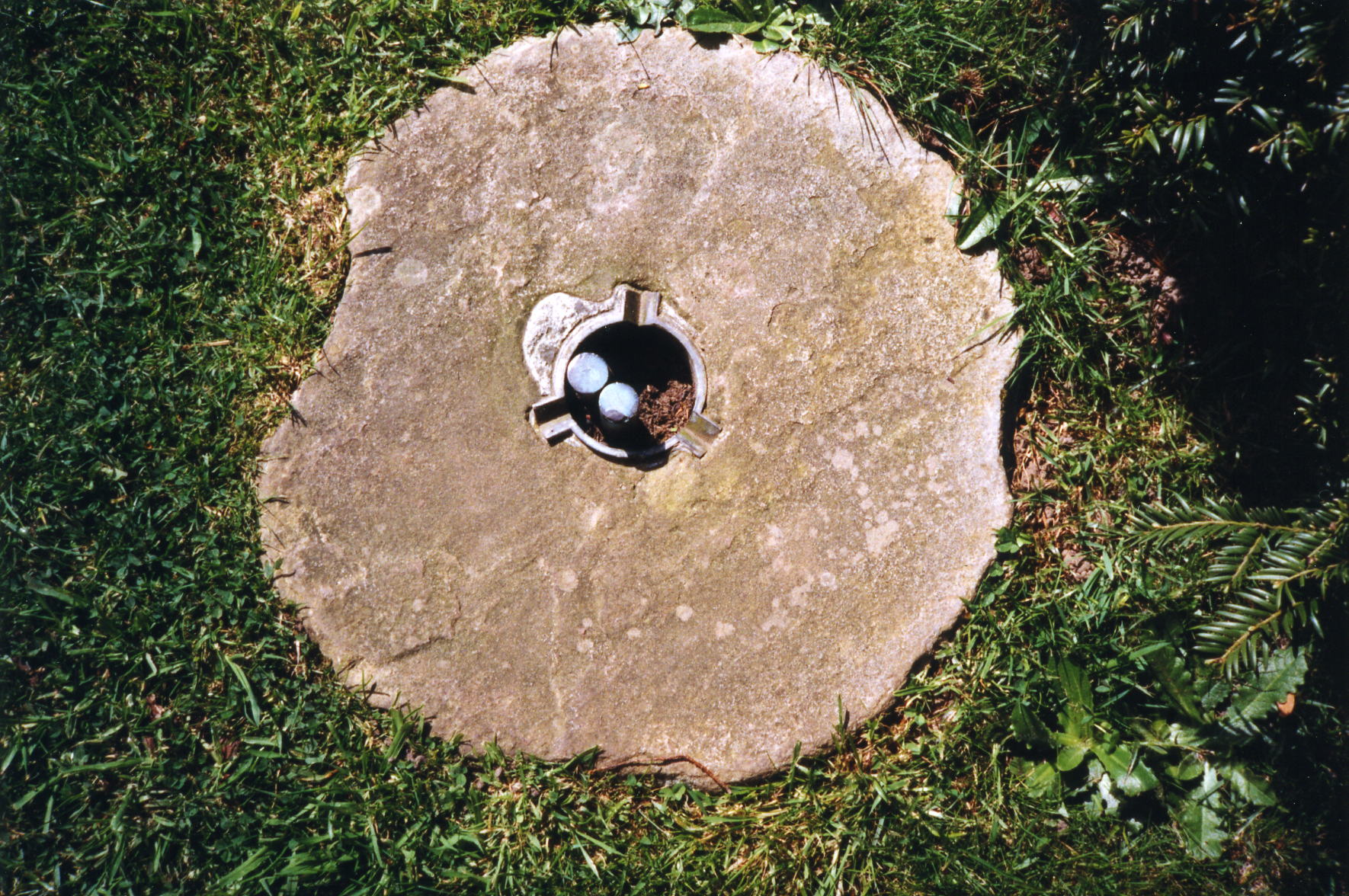
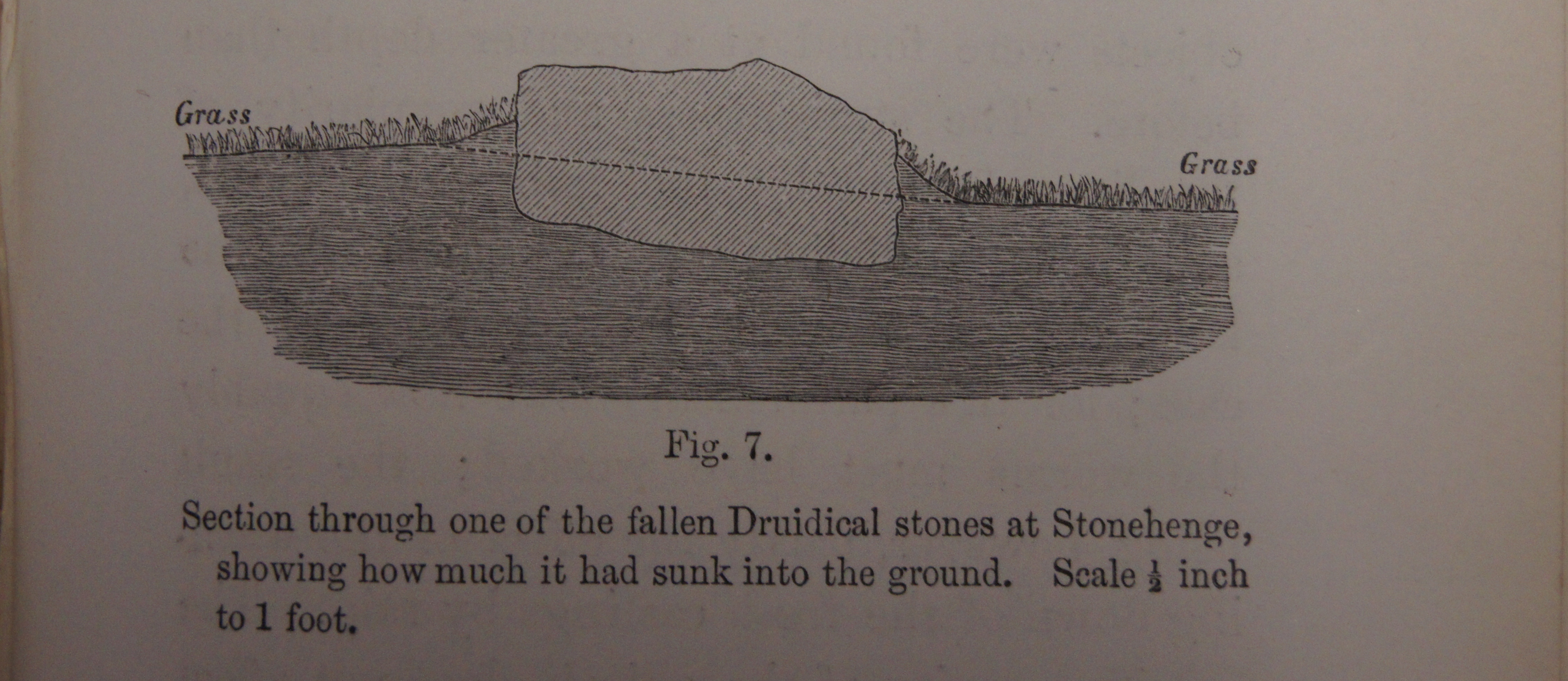
Vegetable mould is the part of the soil that is composed of organic matter derived from, or processed by, living organisms. And worms play a central role. As I mentioned in a previous post, one of the world’s longest experiments is the settling of a round stone in Charles Darwin’s backyard as earthworms eat the soil form under it and shit it out elsewhere. He even documented this process at Stonehenge!

Darwin worm stone

Darwin’s worm experiment

SONY DSC

Effect of earthworms on stones at Stonehenge from the book Vegetable Mould and Earthworms (1888 edition)

But while recognizing the ecologic value of worms and dirt is all well and good, here’s a challenge I suspect most of you will be able to rise to: do you think Charles Darwin thought earthworms are intelligent? Or do you put him in a box of “scientist” who can’t possibly see that they could be sentient beings, who sees all life forms as mechanical automatons.

Well, you know from how I asked it (you did go to school, right?) what the answer is. I quote:

“Judging by their eagerness for certain kinds of food, they must enjoy the pleasure of eating. Their sexual passion is strong enough to overcome for a tie their dread of light. They perhaps have a trace of social feeling, for they are not disturbed by crawling over each other’s bodies, and they sometime lie in contact… they pass the winter either singly or rolled p with others into a ball at the bottom of their burrows Although worms are so remarkably deficient in the several sense-organs, this does not proceed intelligence… we have seen that when their attention is engaged they neglect impressions to which they otherwise attended and attention indicates the presence of a mind of some kind. [comment: some level of free will as Thomas Campbell might suggest?] They are also much more easily excited at certain times than others.” [p 35]

Later in the book Darwin has 32 pages in chapter 2 on “Their Intelligence” where, as a good 19th century naturalist, he collected data on how worms chose what material they used to plug their burrows.

So while many scientists might indeed question whether worms are sentient, WE (you, me and Darwin) won’t, will we? Like Darwin, we recognize sentience when we see it, don’t we? And we are certainly big fans of dirt and worms. Our lives depend on it!


Belief Traps

214

The Diamond Sutra professes that we mistakenly believe in ourselves as persons that are persistent and real entities. We make it up. We want to believe we are this and that and more.

The Lankavatara sutra discusses how we approach reality blinded by  our perceptions and projections, creating rabbits with horns.

A Zen Master said, name the color, classifying it and believing thereby that you know what it “is” in some concrete and enduring manner, and you blind the eye.

As the Enlightenment polymath and genius Laplace is supposed to have said on his death bed, we chase phantoms.

Beliefs.

We want to grasp intellectually, to touch, smell, taste, see, and hear it all. And when we can’t, we fill in the blanks with what we believe should be there, projecting our beliefs, like the way our brains fill in the physiologic/anatomic blind spots in our vision or the details in our peripheral vision that we don’t really see.

We are trapped by our beliefs, and they don’t have to be the clearly wrongheaded absurd beliefs those other people believe that lead to such disasters all of the time, as we can plainly see. Seemingly benign and elegant beliefs can still trap us and become a filter, a distortion, an unconscious bias that keeps us in a fog of delusion, keeping us in a stupor of ignorance.

On top of that, when we have sufficient insight to discover a belief we might be trapped by, a cobbled together way to pretend to ourselves that we know what we are talking about, to explain ourselves and to make our selves more comfortable, allowing us to at least have the illusion that we have some control over things we don’t really understand or have the big picture for, we often simply replace that exposed belief with a more subtle or palatable belief.

We use beliefs as shortcuts, to make our lives easier. That may be a necessary temporizing measure, but it doesn’t work for long. Our beliefs often confer a false security. We are like the turkey that thinks seeing the farmer means feeding time, until of course he is carrying an axe one morning in late November.

This is because beliefs, to the extent that they are beliefs, reflect our state of ignorance, which means our degree of entropy and disorganization, the energy not available for us to use consciously and conscientiously (more on entropy, ignorance and information later), and are at best simply a set of working hypotheses to guide us until we evolve and mature in our actual experience of reality.

Both Buddhism and science (though not all Buddhists or scientists, of course) stress experience (the word “experiment” was derived from the word “experience”), not authority or beliefs. But lacking the requisite experience and maturity, driven by fear and grasping for reassurance, we can’t abide empty files, incomplete knowledge or unclassified experience. They taunt us and remind us of our ignorance, our tentative situation. Of impermanence. Of our limitations in the world of the senses.

IMG00113-20100607-1153

Of course, that is in part why I have thought quantum mechanics might be worth looking at at all for a student of Zen. Whatever interpretation of what quantum mechanics is “really” about that you favor, quantum phenomenon minimally demonstrate that we have to resist trying to jam reality, even experimental reality, into the “how it really is” mentality of the beliefs we hold, the classifications we walk around with in our heads based on our day-to-day experience in the 4-d world of the senses at the level we experience energy transformations.

It won’t fit.

You can jam your experiences into your beliefs and your beliefs into reality, then close the lid, like pushing a spring loaded clown into a Jack in the Box, but eventually the music will stop and pop goes the weasel.

This includes beliefs in materialism (science), Platonism (math), philosophy, post-modernist relativity, religion, political or social ideals, or artistic/poetic ideals like beauty or romantic love, and yes, even Buddhism! To the extent that they are indeed beliefs that are treated as more than mere provisional models to orient you (or say Buddhism as template, as Nyogen likes to say), to the extent that they are concepts, files you need to fit your experiences into, rigid structures that can not expand as you grow and evolve, I suspect that they will sometime or another fail. And then they will cause pain and suffering for yourself and others. Or at least disappointment and disorientation!

I bring this up today because I came across this sentence that I wanted to share in a book called “My Big TOE” by Thomas Campbell:

“Jeez those belief traps are amazing – they can transmute simple ignorance and incompetence into blind stupidity in a flash.”

Been there, done that!

Beliefs: a very, very subtle practice.

138

photos courtesy of Susan Levinson