A friend asked me what a theory of everything (TOE) of Zen would look like. In science a TOE, or a grand unified theory (GUT), usually refers to a set of equations that would unite the forces of nature mathematically. Clearly he was not asking for a set of equations that would encapsulate the experience and practice of Zen. It seemed to me a good question and a fun challenge, at least as an exercise, a heuristic device, a starting point for discussion.
In Buddhism techniques to bring about insight are called “skillful means” (upaya). They aren’t to be confused with the true teaching, the direct experience of reality, but are just something to get you moving. After all, words are dualistic tools that we evolved based on our biologic needs and limitations; they can hardly be expected to accurately encompass all there is and all there isn’t. But we have them, we use them, why not?
So, I decided to answer his question. What is there in Zen that would be true in my GUT and down to my TOEs?
When scientists talk about a GUT they of course demand mathematical rigor, but they also want a GUT to be beautiful; the word they often use is elegant. Scientists live for the “aha” moment when things just go “thunk” as they fall into place. It is both an aesthetic and visceral experience. A GUT needs to be like that, demonstrably true, but maybe it also with just a bit of Stephen Colbert’s “truthiness”!
There is a long tradition of being challenged to encapsulate and simplify, to capture the essence of one’s view of the world. One of my favorite stories growing up was about Rabbi Hillel, who lived just over 2000 years ago. He and another Rabbi were asked by some smart ass to explain Judaism while standing on one foot. The other Rabbi blew the questioner off. Impossible, can’t be done. Impertinent. But Hillel answered the question: “What you don’t like, don’t do to your neighbor. Now go and study” (and the Rabbi Jesus, who was about 10 when Hillel died, would likely have known about this “golden rule”). That was his GUT of Judaism!
I would encourage everyone to try to explore the GUT of their lives. What is at the center? What is your GUT? Whether you are a true believer in this or that dogma or eschew any organized belief system, you have some idea about what is really going on. Try to frame your beliefs, your view of the way things are, in the simplest way possible, trying to achieve clarity, elegance and simplicity. Don’t get lost in details or be seduced by intellectual excursions that serve primarily give you feelings of knowing and brilliance. It may seem trite and obvious when you spell it out, but that isn’t important. Is it authentic to how you see your life? It’s a great challenge.
This friend and colleague who asked me about a TOE of Zen isn’t a Buddhist. He is a scientist and a visionary who is more at home with cell cultures, quantum mechanics or the poetry of the 19th century Transcendentalists than say the stories of 9th century Chinese Chan masters. So my task was to express my GUT in a way that isn’t dependent on Zen stories or any Buddhist terminology. I thought of phrases I heard from Nyogen Roshi from time to time, some of which he heard from Maezumi Roshi, and adapted them for my purposes:
You are the Universe unfolding
Mind evolving
No separation
No beginning, no end
Unlike Hillel, rather than go and study or even think about it, I might add: now, go and meditate.
That’s what’s in my GUT.
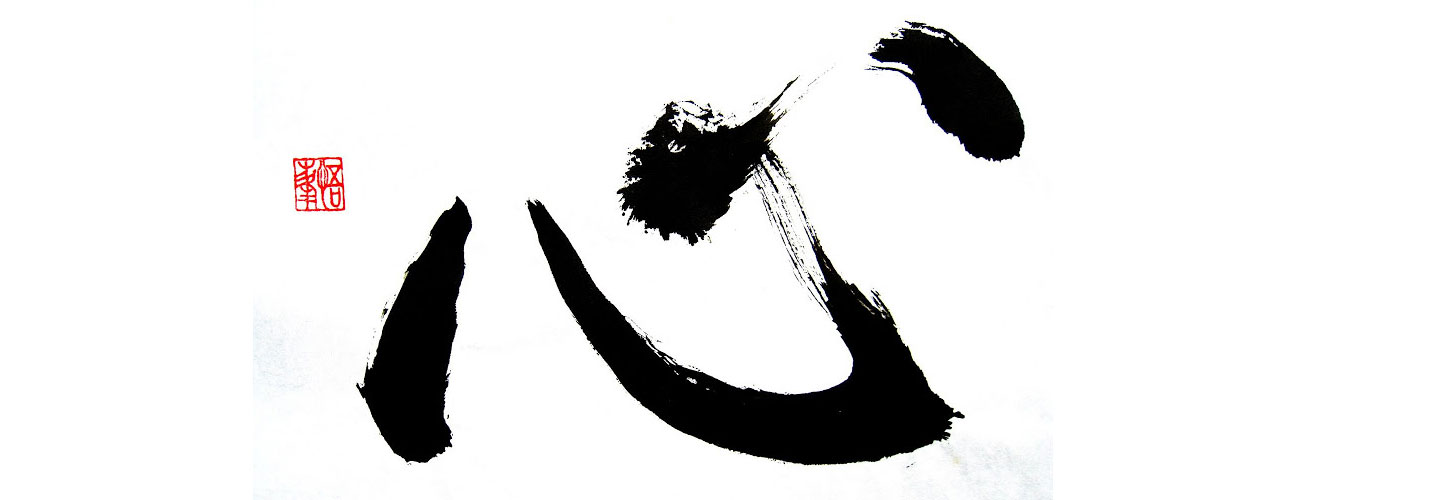

 ZenGut