Where the Rubber Meets the Road; Lessons From a Busy Month


I haven’t written on this website for about a month. I have been doing a lot of reading (non fiction mostly) and writing (trying fiction mostly) while keeping up my practices (medical/scientific and Zen). Very invigorating.

Three themes kept reappearing this month.

First, it is fun to have fun, and to share my enthusiasm, which I often have in abundance, but ego, praise and blame, and the need to “do” sneak in so easily. I set myself up for that!

Second, be careful about the stories you tell, they tend to come true in ways that may be unexpected or in ways that are not literal, but true nonetheless.

Third, when looking at how science describes the way reality functions, whether by studying biology and neuroscience, peeking into into the standard model of particle physics, quantum mechanics, string theory (metaphysics or physics? I am in the camp of those who think the former, but that is for another post), the cosmos as information or hologram, multiverses, multiple layered realities, computer metaphors, or whatever big picture cutting edge science and the various interpretations of science (metaphysics) can offer, it seems to come down to:

Is mind an epiphenomenon arising from evolved brain tissue, itself congealed energy, and that’s as far as it goes, or is Mind primary?

Does Mind arise from energy or is Mind the field in which energy and the organization of energy flows?

Does Mind need another field to maintain it, like a quantum field, or the vacuum with it’s teeming sea of virtual particles and energy without beginning or end, or is Mind a name for the ultimate field that, while still dualistic in a way, is an appropriate term to use because it reflects our experience, that is, is our mind, as we live it?

Is what we can measure and perceive primary or is consciousness primary?

Do we really describe Reality with the tools of the intellect, the mathematics we invent, the changes in energy we perceive with our senses, or do these tools of the mind just provide a great quantitative look at one layer that our monkey brains can handle, at the scale we evolved to live in, even if we push that out very far with very clever instruments and experiments, with the underlying energy and principles arising from Mind rather than the other way around?

Even that is of course a story, a concept, but I think when talking about science and practice, about how it is, that is where the rubber meets the road.

It isn’t whether I think I can prove Mind is primary. That’s exactly my point. It has been said that it is like a fish trying to prove water.

That’s why as busy as I get, and as interesting as I am to myself (I amuse myself greatly though it gets a bit much even for me sometimes), I keep up my practice.

I’m kind of curious.
Right Effort and Conditioning

I was convinced at an early age that I was lazy. I heard it often enough from my mother. And then I heard it from my teachers when I couldn’t be bothered with homework or studying. I bought it. I embraced it.

When my sixth grade teacher told me that despite my over the top standardized test scores he wouldn’t put me in the special program that would allow me to skip eighth grade because I didn’t ever do any work, I had to at least concede that I could see his point. I had long before established my what was then called “underachiever” status.

Cost me a !@#$ing extra year of school, but you know, I had to be me!

But in fact I always did stuff. Even as an underachieving smart-assed kid and teenager. I just did what interested me. While getting mostly B’s and C’s in high school (the only math A I got was in geometry when a substitute teacher challenged me by pointing out geometry was about THINKING! So I actually did the homework and looked forward to the tests!) I took the subway after school to NYU to sit in on a university art history course. I would read Shakespeare and go see Shakespeare in the park in Central Park (it was free!). I haunted the Metropolitan Museum of Art. I was learning ancient Egyptian. I painted and drew.

But to this day I tend to be on the look out. Am I slacking? Were they right? If I stop, if I relax my guard, will I revert to that “lazy kid,” like a once productive cultivated field being reclaimed by weeds?

For that matter, would that be all bad?

Do I honestly think it would all come apart? That the Buddhist “right effort” requires some concept of achieving?

Well, Nyogen Roshi quotes Maezumi Roshi as saying the effort of no effort is the hardest effort you will ever make.

Amen.

I bring all of this up because I was going to write about very positive experiences I have been having peeling back some of the layers of my medical conditioning. How I am, even now, this late in my game, becoming a bit of a better doctor, a little bit better healer, teacher of doctors and mentor. And I give credit to my practice. And to right effort. I will get into that in another post, but for now I want to note that rather than staying positive, the way I framed it in my mind, the way I was going to introduce it here, was that I discovered that I was intellectually lazy.

Really?

I mean, REALLY?

Conditioning. It seeps in very deep.

Mental friggin’ fracking.

Psychic pollution.

Nyogen Roshi says Buddhism is one loud cry of affirmation. Perhaps the first affirmation is to stop calling yourself names.

Love and Marriage


Caring

Desire

Partner

Hormones

Conditioning

Biologic imperatives

Expectations, voiced or not

Innocence lost, innocence gained

How close is too close, how much is too much?

Not understanding, understanding

Different worlds, same world

Why do I want to be angry?

Glorious and amazing

Wishful thinking

Commitment

Projection

Entangled

Creative

images

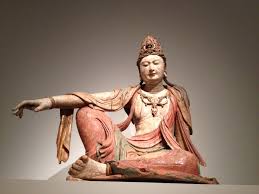
Guan Yin (Kannon in Japanese) , Bodhisattva of compassion, in female form. The male form was originally named Avolikiteshvara. She is the “hearer;” she hears the cries of all suffering, and will go down to the pits of hell gladly when she is called.

After 41 years of marriage to a woman I love, that’s about the only way I can understand it or express it, with poetry. And I rarely write poetry.

I doubt this is gender specific or sexual orientation specific from what I can see. And there are many relationships that are long-term and loving that I imagine do not encompass many of these things. This is simply what spilled out of me about my 44 years of a committed relationship with a woman I love as best as I know how.

I’ll come up with other poems about other relationships.

The real point is that I suspect there is something very deep and profound that these impressions of my life in love and in marriage circle around, that even the most solid day-to-day love can only approach or maybe only dimly reflect as long as egos and agendas are involved:

A love beyond conditioning and expectations.

Abiding compassion.

I think that is the flavor of Xin, the heart of Mind, the taste of existence.

And it doesn’t get old.

Why Zen and Not a Modern Mindfulness Practice for Me?

SONY DSC

Print by Claudia Hosso Politi Sensei (teacher at the Black Scorpion Zen Center in Mexico)


If my goal was only to be a little calmer and improve my day-to-day life, a modern mindfulness approach would be easier than Zen practice. There is a mindfulness center at UCLA where I work. It looks really good judging from the website and a couple of brief conversations I have had with the staff there, and would be much more convenient than driving across town to a dicey neighborhood to the Hazy Moon Zen center. Mindfulness practices are certainly less demanding than a sesshin (a very formal and intense meditation retreat, usually lasting 3-10 days). Maybe it would even be a good career move; I could be the mindfulness eye doc without this Zen baggage! Continue reading

My Berlin

IMG00090-20100605-1212

A wall I stumbled on in former East Berlin

I was in my 40’s, after I finished my residency and fellowship and was working as an ophthalmologist, when I first got a passport and took my first trip abroad.

My travels are usually connected with medical or scientific research or meetings. I have spoken at such meetings on every continent except Antarctica.I have friends and colleagues around the world.

I have a longstanding research collaboration in Paris that has allowed me to visit a dozen times and get to know the city, once having the honor of being one of the few Americans to have spoken at the French Academy of Ophthalmology (to an audience of 3500 doctors form around the French-speaking world).

Having a long-standing interest in art and art history, I have visited many of the worlds great art museums, gazed at Michelangelo’s paintings in the Sistine Chapel, climbed Brunelleschi’s dome in Florence, entered pyramids, temples and tombs in Egypt (including a couple normally closed to the public), admired Zen temples in Kyoto, had a special entry to see Tang dynasty paintings in Xian, and climbed pyramids in Mexico.

I have been to a party in a foreign embassy, seen Iguazu Falls in South America and snorkeled at the great barrier reef. These are just a sample of what  immediately comes to mind when I think of the trips I have packed in over the last 18 years.

I have gotten around, and would have crossed off a lot of things on my bucket list if I believed in and had a bucket list (I don’t like that idea in the least bit. Dumb and pointless).

Nice enough, I don’t mean to be ungrateful, but for the most part, all of this has had only a modest impact on my life (except for the friends).

Really. When I am struggling in this or that  dark night of the soul from time to time, I promise you these memories mean little. They don’t even come up.

SONY DSC

Water color sketch of Adam of the Sistine Chapel

But the trip that made a difference, the one that taught me something that mattered because I was actually there and so taught me what travel could be about, was my trip to Berlin for the World Ophthalmology Congress in 2010. Continue reading

Work As The Expression of Love

When I was a teenager thinking about life and death and my place in the cosmos, I did not trust science at all. I had the early 19th century Romantic, Mary Shelly’s Dr. Frankenstein and his ungodly creation, view of science and progress as being out of control, aberrations not worth the few baubles they provided. Science led to atomic weapons and to pollution, serving as the tool of soulless greed and reveling in intellectual arrogance. Progress was a cancer, uncontrolled and uncontrollable. Science and progress had become what we would now call “too big to fail,” and I wanted no part of them, at least not as a source for answers to the questions that mattered. Of course, the real question that mattered was when I was going to get laid, and when that happened, when I would again, but still, it seemed to me that we had likely taken a wrong turn somewhere around fourteen thousand years ago with the invention of agriculture. Continue reading